
Description
Bean Polish (Herrenböhnli)
Phaseolus vulgaris
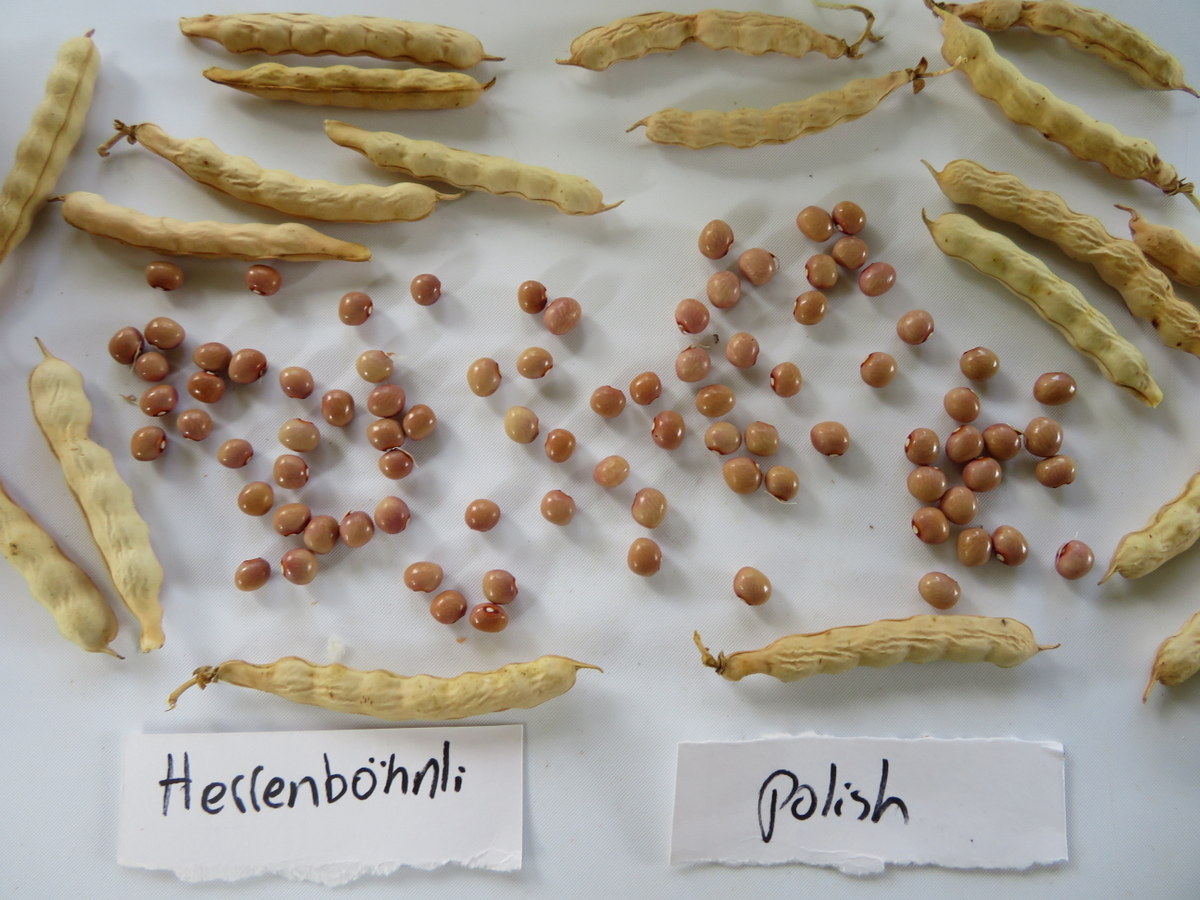
Dry bean. Pole bean, needs a 2 meter stake. Small, round, pinkish-beige grains. Delicious and productive. Perfect for soups and baked beans.
Full sun, well drained soil. Direct sowing after the last frost or indoor sowing 10 days before. 2 cm deep. 15 cm between plants.
Germination: 85% in December 2025
Ecological seeds produced at Catherine’s Ornamental Garden.
Note
I bought this bean from Heritage Harvest Seeds in 2015. Obviously, that’s the name they give them because of its Polish origin. I always figured it must exist under another name somewhere else in the world. As long as we were ordering the Japanese Cherry bean from De Tuinen van Weldadigheid, we took the opportunity to bring in the Herrenböhnli bean, which looked a lot like Polish from their photo. Compared in the summer of 2025, it turns out that both beans are exactly the same. On the other hand, there are many more references under the name Herrenböhnli.
The name translates as ‘Gentleman’s little bean’. According to the Garden Faerie Botanicals website in British Columbia, “these beans have historical significance: they are thought to be a pre-1800 soup bean variety, named after the Herren, Teutonic knights.
Also known as Herenbone or Heer Bone (Boontjie), the Herrenböhnli bean has considerable historical significance. Its original Dutch name, meaning “the lord’s bean”, evokes its connection with the first Dutch governors of the Cape region, suggesting its roots in Dutch colonial history.
Attributed to Jan van Riebeeck, an emblematic figure of Dutch colonization and founder of Cape Town, the Herrenböhnli bean is said to have been introduced by him to local farmers in the 17th century. Originally from Lima, this bean has adapted perfectly to the difficult conditions of the Sandveld, characterized by poor soil and low humidity.”


Ariane –
Facile de culture, j’en ai fait les meilleures fèves au lard que j’ai mangées jusqu’à présent.